




Blog
How to Choose Picture Frame Sizes for Your Home
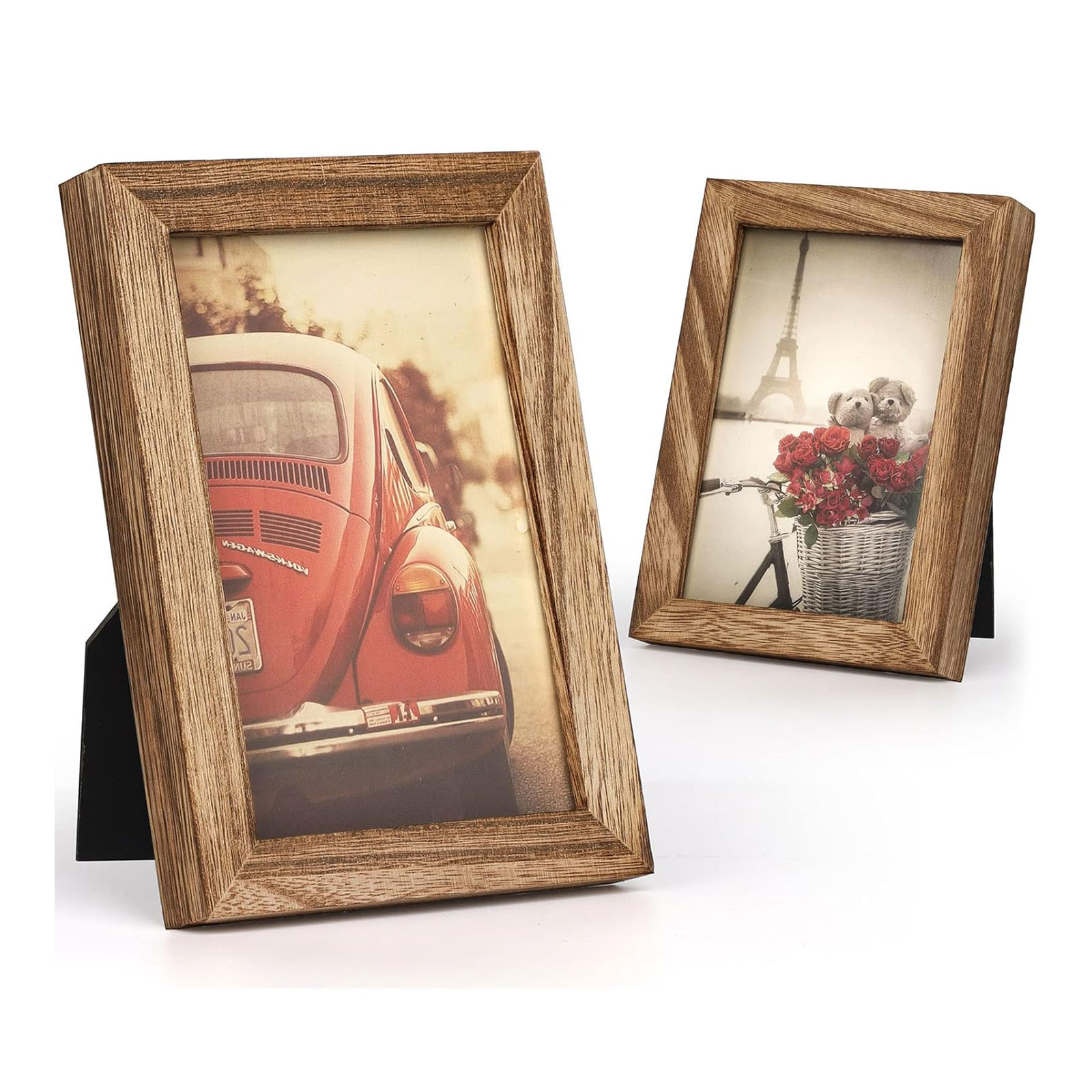
A frame labeled 4 x 6 does not necessarily measure 4 x 6 on the outside. The label usually refers to the photo size, while the molding, mat and stand increase the total footprint. A reliable plan starts with the image, then checks the visible opening, orientation, frame depth and final outer dimensions.
- Match the frame to the actual print, not a screen ratio.
- Check the visible opening if important details sit near the photo edge.
- Use outer dimensions when planning a wall or tabletop arrangement.
- Choose wall, tabletop, folding or hanging formats based on how the display will change.
Understand the four measurements that matter
Photo size is the paper dimension, such as 4 x 6 or 5 x 7 inches. The visible opening may be slightly smaller because the frame lip overlaps the print. A mat creates a border and requires a larger frame. Outer dimensions include the molding and determine how much wall or tabletop space is needed.
Depth matters for certificates, layered keepsakes, double-sided glass and thicker prints. Read the product dimensions instead of relying only on the advertised photo size.
- Print size: the physical photo or document.
- Visible opening: the area not covered by the frame lip or mat.
- Outer size: the full footprint including molding.
- Depth: the space available for glass, backing, mats or layered items.
Choose a format for the location
A tabletop frame needs a stable footprint and enough depth behind it for the easel or folding panels. Wall frames should use hardware appropriate to their weight and orientation. Hinged frames create a self-standing group, while hanging photo displays support frequent updates and informal collections.
For a hallway or staircase, wall-mounted formats keep surfaces clear. For a desk or nightstand, a smaller frame that does not block task space is usually more practical.
- Tabletop: desks, shelves, mantels and nightstands.
- Wall-mounted: hallways, gallery walls and rooms with limited surfaces.
- Hinged or folding: grouped family photos without wall installation.
- Hanging clip display: frequently changing prints, cards and casual memories.
- Keepsake frame: layered art, handprints or meaningful objects.
Plan a gallery without visual noise
Choose a consistent element such as frame finish, spacing, photo palette or center line. Mix orientations deliberately and place the strongest image near eye level. Use paper templates to test the composition before drilling.
For a single statement piece, compare the frame width with the furniture below it. A very small frame above a wide console can feel disconnected; a group or larger outer dimension may create better proportion.
- Keep gaps consistent across a grouped wall.
- Align centers when outer frame sizes vary.
- Use archival-quality materials when preservation is important.
- Leave room for doors, switches and furniture movement.
Prepare prints for a clean fit
Print at the correct physical size and crop intentionally. Important faces, text or signatures should not sit directly at the edge where the frame lip may cover them. Clean glass with the appropriate product before assembly and let every surface dry completely.
If a certificate or irreplaceable print has conservation needs, consult a professional framer rather than relying on a decorative consumer frame.
A practical plan you can use
- Measure the physical print or document.
- Check the required orientation and whether a mat will be used.
- Compare the visible opening, outer dimensions and depth.
- Select tabletop, wall, hinged or hanging placement.
- Test wall groups with paper templates at normal eye level.
- Clean and assemble the frame on a protected surface.
Frequently asked questions
Does a 4 x 6 frame have 4 x 6 outer dimensions?
Usually no. The 4 x 6 label generally describes the photo size. The molding and stand make the outer frame larger.
Should picture frames match throughout a room?
They do not need to be identical. A consistent finish, spacing, color family or alignment can make mixed frames feel intentional.
When should I use a mat?
A mat creates visual breathing room and separates the print from the glazing, but it increases the required frame size. Use conservation-grade materials for valuable work.