




Blog
How to Organize Jewelry Without Tangling Necklaces
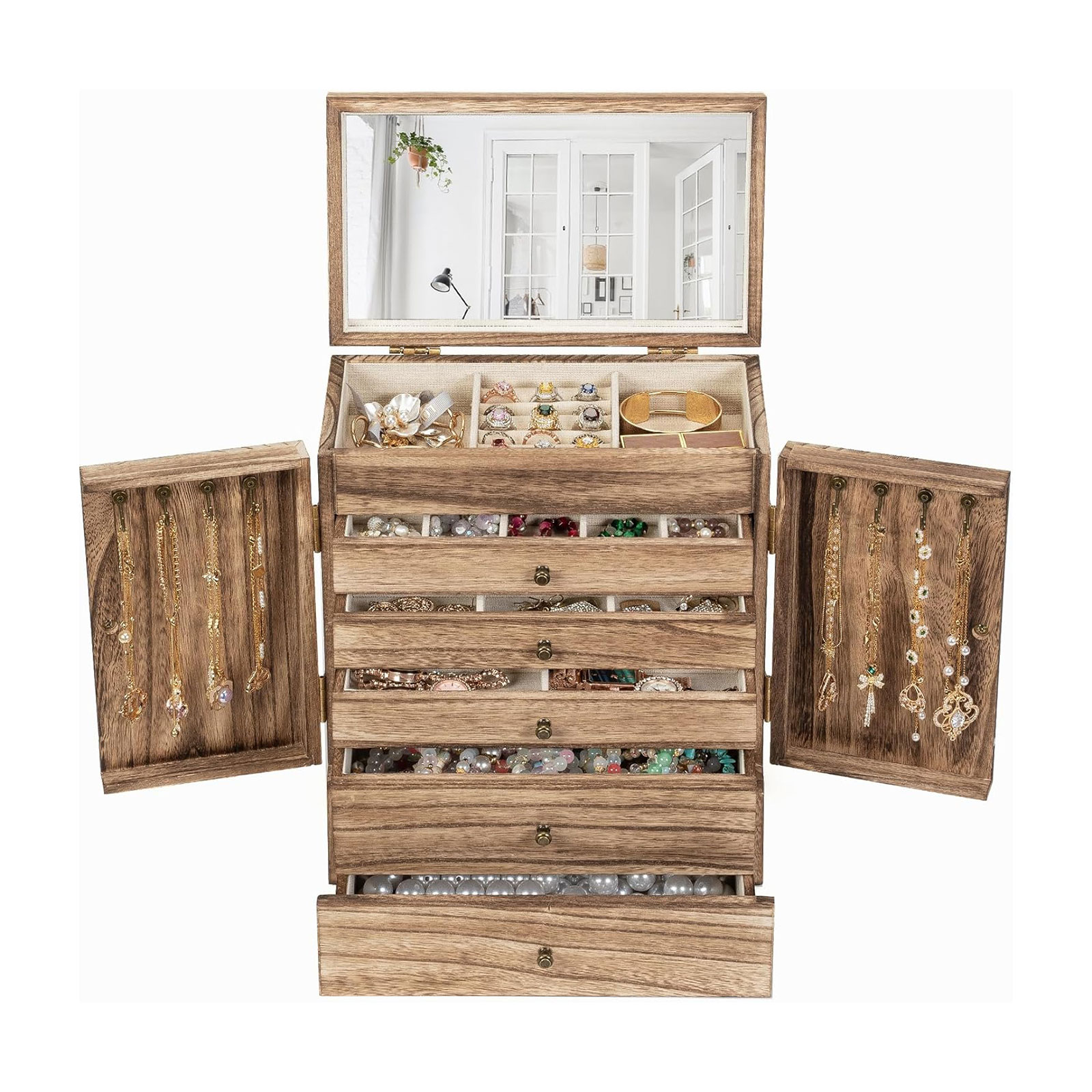
Jewelry becomes difficult to wear when necklaces knot together, earrings lose their partners and small rings disappear into deep drawers. The most useful organization system is not necessarily the largest one. It is the system that separates pieces by how they are handled, makes frequently worn items easy to reach and fits the available dresser, vanity, wall or closet space.
- Separate jewelry by movement and contact risk, not only by type.
- Use hanging space for necklaces and divided storage for small pieces.
- Measure the collection and the furniture surface before buying an organizer.
- Keep valuable or delicate pieces in storage appropriate to their material and security needs.
Why necklaces tangle in the first place
Chains tangle when they share a loose compartment and move against one another as a drawer opens or closes. Fine chains, long pendants and layered necklaces are especially likely to catch on clasps, charms and textured metal. A single large drawer may look tidy immediately after organizing, but it does not control movement.
The simplest improvement is to close each clasp before storage and give long chains a vertical path. Hooks, necklace doors and wall-mounted organizers keep chains separated. Shorter chains can rest in shallow divided sections as long as each section holds only one or two compatible pieces.
- Close necklace clasps before hanging or laying them flat.
- Keep very fine chains away from chunky pendants and textured pieces.
- Use enough vertical clearance so pendants do not pile up at the bottom.
- Avoid hanging heavy jewelry from hardware that is not rated for the load.
Create zones for the way you get dressed
A useful organizer follows the order of a normal routine. Everyday earrings and rings should be visible near the front. Occasion pieces can use deeper drawers. Watches and bracelets need wider compartments than stud earrings. Separating these zones reduces the amount of searching and handling each morning.
If several people share a dresser, assign a drawer, tray or side of the organizer to each person. For a growing collection, leave some open capacity rather than filling every hook and compartment immediately.
- Daily zone: the pieces worn most often.
- Small-item zone: rings, studs, backs and pins.
- Hanging zone: necklaces and longer bracelets.
- Wide compartment zone: watches, cuffs and statement pieces.
- Protected zone: delicate, sentimental or material-sensitive jewelry.
Choose between a box, stand and wall organizer
A jewelry box provides enclosed storage and is useful when dust control and visual calm matter. A rotating stand makes earrings and accessories easy to scan from several sides. A wall organizer preserves dresser space and can provide long necklace clearance. None is universally best; the room and collection determine the right format.
Measure the available width, depth and height. Open every drawer and side door in the product dimensions, not just the closed footprint. If the organizer has a mirror, consider the viewing angle and lighting at the intended location.
- Choose enclosed drawers for small mixed collections and a quieter appearance.
- Choose a rotating stand for high visibility and frequent access.
- Choose wall storage when the dresser is small or necklaces are long.
- Choose an armoire only when there is enough floor space and safe access.
Protect jewelry after it is organized
Organization reduces contact, but material care still matters. Pearls, soft stones and easily scratched finishes may need separate lined sections. Silver and other tarnish-sensitive metals should be stored according to the jewelry maker's care guidance. Remove moisture, cosmetics and fragrance residue before putting pieces away.
An organizer is not a safe. High-value jewelry may require locked, insured or climate-appropriate storage beyond a decorative box or stand.
A practical plan you can use
- Lay out the collection and remove pieces that need repair or cleaning.
- Group items by storage behavior: hanging, shallow divided, wide compartment or protected.
- Measure the longest necklace, largest watch and available furniture or wall area.
- Assign a daily-access zone and a less-accessed occasion zone.
- Label or photograph the finished arrangement so it is easier to maintain.
- Review the system after two weeks and adjust the compartments that still collect clutter.
Frequently asked questions
Is it better to hang necklaces or lay them flat?
Hanging is usually convenient for everyday necklaces when each chain has its own hook and enough clearance. Very delicate, heavy or material-sensitive pieces may be better stored flat in individual lined sections according to the maker's care guidance.
How much extra capacity should a jewelry organizer have?
Leaving roughly 15 to 25 percent of the hooks or compartments open makes the system easier to use and gives a growing collection room without immediate crowding.
Can a jewelry box prevent tarnish?
A box can reduce dust and contact, but it does not automatically prevent tarnish. Material, humidity, residue and storage products all matter. Follow care advice for the specific metal or gemstone.