




Blog
How to Choose the Right Wall Mirror Size
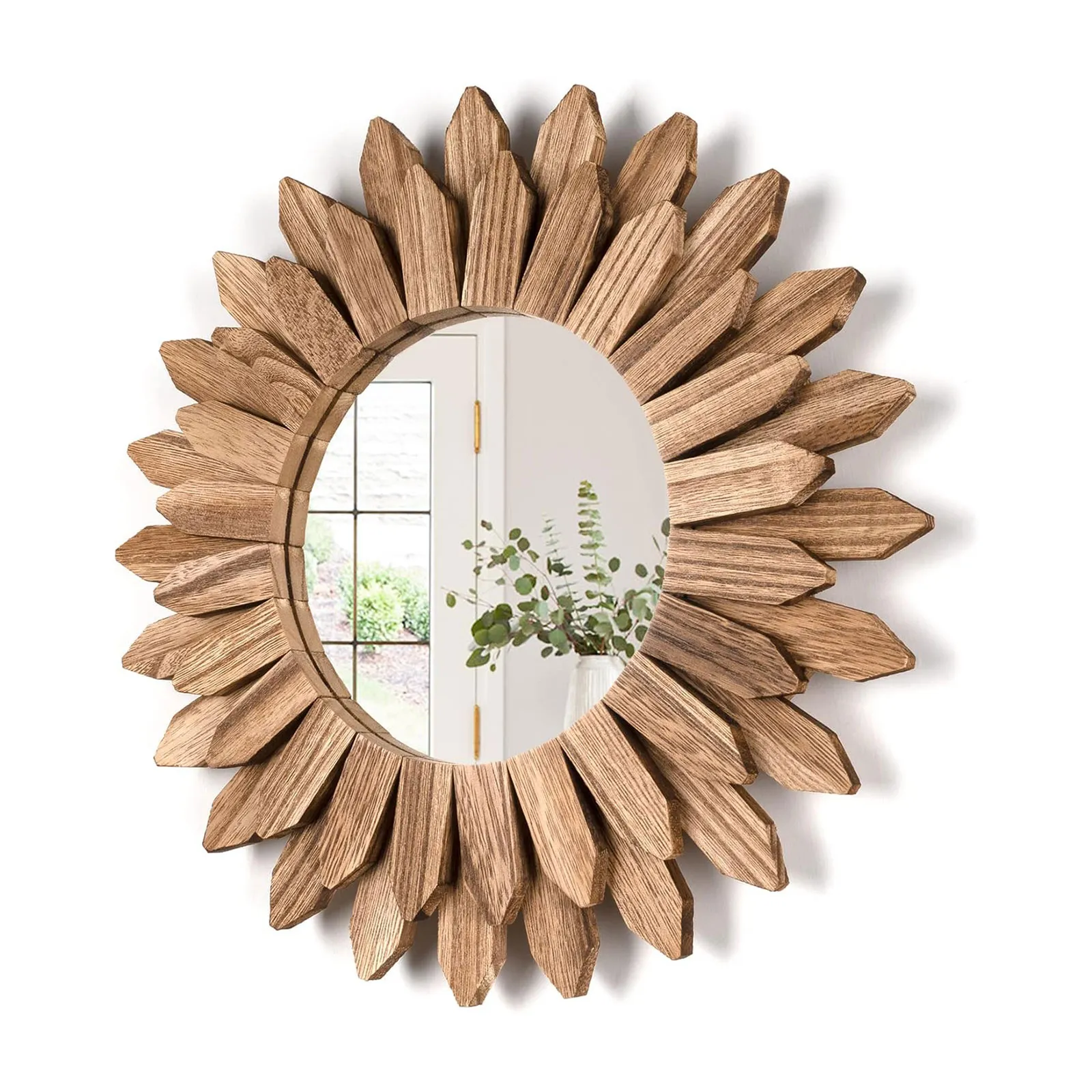
Mirror size is not only about filling an empty wall. The frame needs to relate to nearby furniture, reflect something useful or attractive and leave safe clearance around doors, lighting and traffic. Decorative sunburst frames also have a much larger visual diameter than the reflective glass at the center.
- Measure outer frame dimensions, not only the reflective surface.
- Compare mirror width with the furniture or wall zone below it.
- Check the reflection from normal standing and seated positions.
- Use mounting hardware rated for the mirror and wall type.
Use the furniture below as a starting point
Above a console, dresser or vanity, a mirror often feels connected when it is narrower than the furniture but substantial enough to form a clear group. Exact ratios are flexible, especially with irregular or sunburst shapes, so use painter's tape or a paper template rather than relying on a single design rule.
In a narrow entryway without furniture, define a visual zone between door trim, switches and nearby corners. Leave enough breathing room that the frame does not feel wedged into the space.
- Measure furniture width and the open wall above it.
- Mark the full outer diameter or irregular frame outline.
- Leave clearance for lamps, sconces and opening doors.
- Check the composition from the room entrance.
Test what the mirror will reflect
A mirror doubles whatever sits opposite it. A view of a window, artwork or open room can add light and depth. A reflection of clutter, a television cable area or a private space may be less desirable. Stand at the normal viewing positions and check the reflection before mounting.
For a functional entryway mirror, confirm that users of different heights can see what they need. Decorative mirrors can sit higher, but they should still relate to surrounding objects.
- Check standing eye level for the primary users.
- Look from adjacent rooms and seating positions.
- Avoid reflecting intense direct sunlight toward work or seating areas.
- Consider privacy when the mirror faces bedrooms or exterior windows.
Understand sunburst and decorative proportions
A 12-inch sunburst mirror may describe the overall decorative diameter rather than a 12-inch reflective area. Read both the overall dimensions and center mirror size. The radiating wood frame creates more visual presence than a simple round frame of the same diameter.
When pairing a decorative mirror with a wall clock or frames, repeat one element such as wood tone, circular shape or center line rather than matching every detail.
- Overall frame diameter controls wall footprint.
- Reflective diameter controls functional viewing area.
- Frame depth affects shadows and side clearance.
- Irregular shapes need more breathing room than simple rectangles.
Install for weight and wall conditions
Use the supplied hardware only when it is appropriate to the wall construction and mirror weight. Locate studs or use correctly rated anchors. Do not hang a mirror where a door can strike it or where the bottom edge creates a head-contact risk.
Clean the reflective surface with a product appropriate to the glazing and prevent liquid from collecting around a wooden frame.
A practical plan you can use
- Measure the outer mirror size and nearby furniture or wall zone.
- Create a full-size paper template and tape it in place.
- Check reflections from all normal viewing positions.
- Confirm eye level, door clearance and lighting relationships.
- Select mounting hardware for the wall type and actual weight.
- Recheck level and hardware after the mirror has settled.
Frequently asked questions
How wide should a mirror be above a console table?
There is no mandatory ratio, but a mirror that is narrower than the console and visually centered often feels connected. Test the actual outer dimensions with a template.
Does a 12-inch sunburst mirror have 12 inches of glass?
Not necessarily. The listed size may describe the full decorative diameter. Check the specifications for the reflective center dimensions.
How high should a wall mirror be?
Place functional mirrors so primary users can see comfortably, while also considering furniture, frame size and room sight lines. A template provides a more reliable result than a fixed universal height.